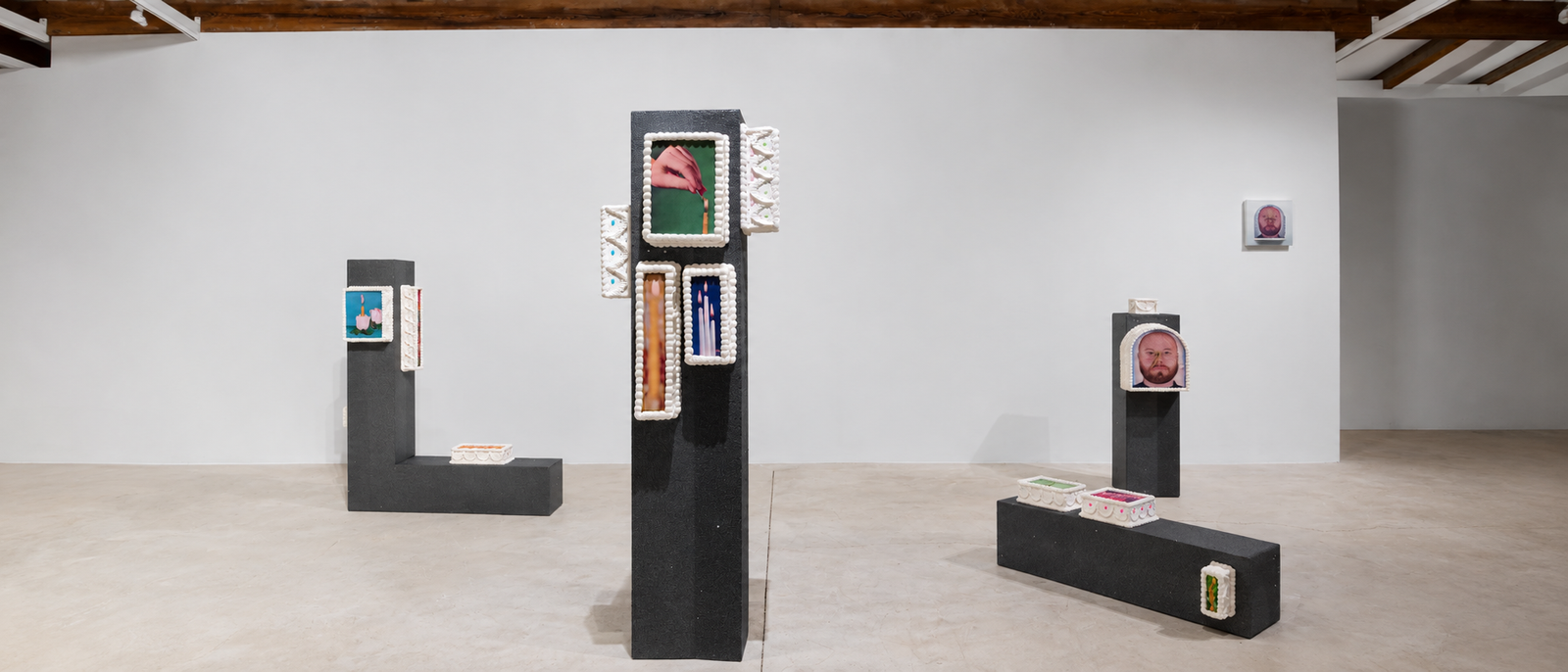
It is difficult to imagine a moment in history when images have been as present as they are today. They accompany us from the moment we wake up until we go to bed, appearing on the screens we carry with us, in the shop windows we pass every day, and in the advertisements that slip between conversations, songs, or news. There are so many of them, circulating at such speed, that we rarely stop to think about them; everything is presented so naturally that we are barely aware of it.
And yet, their constant presence has rendered them almost invisible. Images are so deeply embedded in our daily lives that we rarely stop to question the role they play in shaping our desires, values, and patterns of behaviour. They are not mere representations of reality. They shape what we desire, what we value, and ultimately the way we inhabit the world. Through them, shared imaginaries are constructed, quietly influencing the ways we think, relate to one another, and act. It is precisely within this capacity of images to produce meaning, shape desire, and consolidate particular narratives that Plastic Metamythology, Alexander Long’s first solo show in Mallorca, is situated.
Although the intensity with which we coexist with images today may seem like an exclusively contemporary phenomenon, their ability to guide values, beliefs, and aspirations has a much longer history. From the religious and monarchical representations of feudalism to the visual compositions associated with wellbeing and consumption that predominate today, visual culture has always contributed to consolidating the dominant narratives of each era. What has changed is not so much their function as what they promote.
This relationship between image, desire, and cultural construction runs throughout Alexander Long’s practice. Raised on the outskirts of Fresno, California, the artist witnessed how the rural landscape of his childhood was gradually replaced by tract housing developments, retail chains, and large commercial centres. Since then, his work has focused on investigating how images participate in the production of desire, not so much through what they show, but through what they promise.
Within this investigation, the cake occupies a central position. Associated with celebration and family occasions, it is an apparently innocent object that condenses an enormous cultural weight. Long recreates these cakes using traditional cake-decorating techniques and industrial materials that completely negate their edible condition. Transformed into sculptures, they cease to function as objects of consumption and instead become analytical tools through which to examine how images generate meaning.
The choice of the cake is far from incidental. Its constant presence in advertising, supermarkets, birthdays, and representations of family celebrations has been repeated so frequently that it has become integrated into the collective imagination as an apparently natural tradition. What began as a consumer product gradually transformed into an inseparable component of certain social rituals. In fact, this same dynamic can be observed even in traditions that predate consumer culture itself.
Candles, whose representation recurs throughout many of the works in the exhibition, refer to spiritual and pagan rituals that have survived by transforming alongside society. Although few people today associate the act of blowing them out with its original meaning, they continue to occupy a central place within the celebration. The exhibition therefore suggests that rituals do not disappear: they are reformulated and absorbed into commercial logic, incorporating new meanings that eventually become naturalised through the repetition of images.
It is precisely at this point that Long’s practice becomes most incisive. The exhibition suggests that many of the traditions we perceive as spontaneous or natural are, in fact, cultural constructions consolidated through repetition. As the artist himself states: “Whatever is placed on a cake becomes a celebration of that subject.” Images do not merely accompany these processes; they actively participate in them, transforming products into symbols, habits into rituals, and individual desires into shared experiences.
And therein lies one of the central questions of Plastic Metamythology: what happens when that which we celebrate has been designed in advance to be desired?